
Last year, my 62-year-old father went for his annual lung CT scan. His radiologist, Dr. Chen, used an AI tool to analyze the images alongside her own assessment. The AI flagged a tiny 3mm nodule in the upper lobe of his left lung – something even Dr. Chen admitted she might have missed on a busy day. That early detection meant my dad could have minimally invasive surgery before the cancer spread. Today, he’s cancer-free and back to gardening. That’s the power of AI in medical diagnosis: it doesn’t replace doctors, but it gives them superpowers.
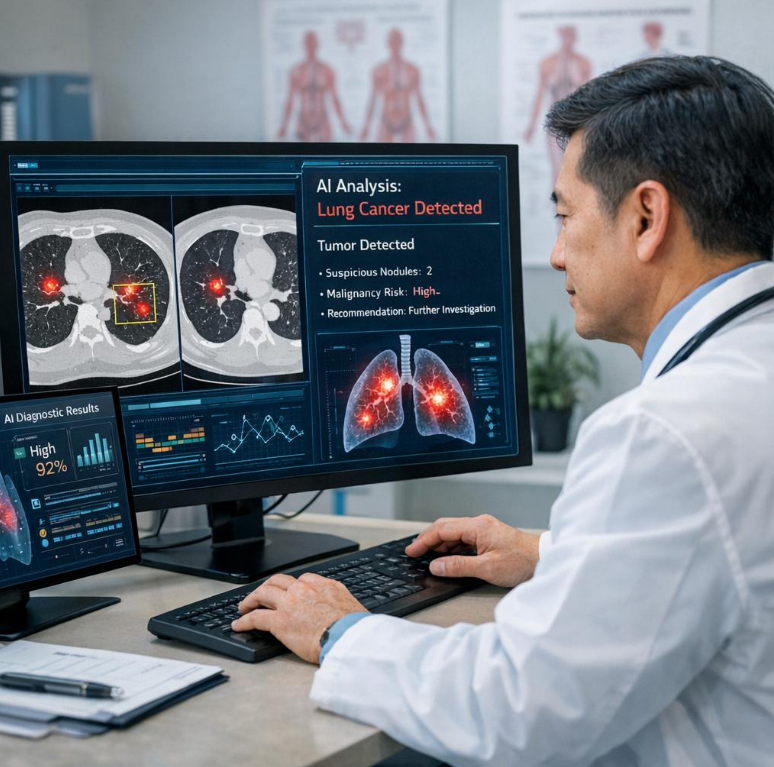
The most remarkable thing about AI in healthcare is its ability to see what humans can’t. Trained on millions of medical images, deep learning algorithms can pick up subtle patterns and abnormalities that even the most experienced clinicians might overlook. For example, AI-powered retinal scanners can now detect not just eye diseases like diabetic retinopathy and glaucoma, but also early signs of cardiovascular disease and even Alzheimer’s – all from a simple photo of your eye. In rural areas where specialists are scarce, these tools are literally lifelines, bringing world-class diagnostic capabilities to communities that would otherwise have to travel hundreds of miles for care.
Beyond imaging, AI is transforming how we predict and prevent disease. Machine learning models can sift through electronic health records, lab results, and even wearable device data to identify patients at high risk of developing conditions like diabetes, heart disease, or sepsis. During the COVID-19 pandemic, AI models helped hospitals predict bed shortages, identify potential drug candidates, and track the spread of the virus across populations – all at speeds that would have been impossible for humans alone.
Of course, AI isn’t perfect. There are real concerns about data privacy, algorithmic bias, and the need for proper regulation. An AI system trained mostly on data from white patients might not perform as well for Black or Latino patients, leading to misdiagnoses and health disparities. That’s why it’s crucial that we develop these tools with diversity and equity in mind, and that human doctors always have the final say in patient care.
But when used responsibly, AI has the potential to revolutionize healthcare as we know it. It can help us catch diseases earlier, treat them more effectively, and make healthcare more accessible and affordable for everyone. My dad’s story isn’t unique – every day, AI is helping doctors save lives in ways we never thought possible. And that’s something worth celebrating.